Home/ The Neutralizer/ How to Beat Bangers
Strategy Article

How to Beat Bangers in Pickleball

Stop losing to hard hitters. The complete strategy for neutralizing pace in doubles — without matching it.

The Short Answer
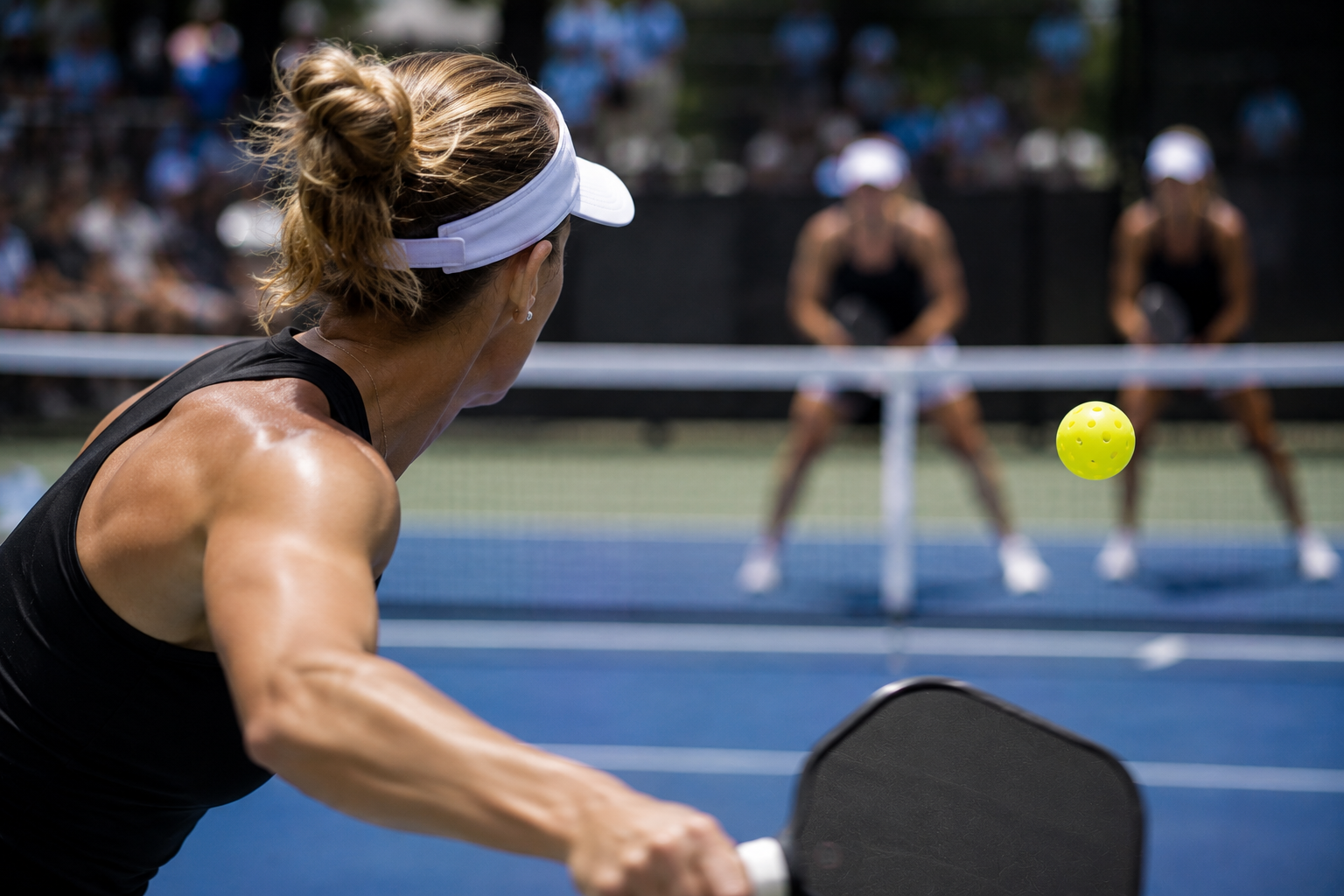
Beat bangers by neutralizing their pace rather than matching it. Keep your paddle forward, use soft hands to redirect pace into the kitchen, and deny them the high-contact-point balls they need. The goal is not to win the ball — it is to make the attacker hit one more ball. Bangers need your cooperation to win. Stop cooperating.

Why Bangers Win — and Why They Shouldn't

A banger wins in recreational pickleball for one reason: their opponents panic. The hard shot arrives, the defending player swings back hard, the pace exchange escalates — and the banger wins because they are better at pace exchanges than most recreational players.

Here is the truth: bangers need your cooperation to win. They cannot generate pace from soft, low balls. They cannot attack balls below the knee. They cannot sustain a hard game when the opponent keeps resetting into the kitchen. The moment you stop cooperating — stop swinging hard back at hard shots — their primary weapon stops working.

Pickleball was designed to throttle pace. The perforated ball slows down faster than a tennis ball. The solid paddle absorbs energy rather than amplifying it. The court is short. The equipment and the geometry are on your side. The banger is fighting the design of the game. Your job is to understand that — and work with it.

The Core Principle
The Attacker Supplies the Pace. You Decide What Happens to It.
"Pickleball rewards the player who understands the next ball, not just the current shot." — The Game Within the Game

The Libero Mindset — Change How You Think About Defense

In volleyball, the libero is a defensive specialist who reads attacks, absorbs pace, and keeps the rally alive. The libero is not trying to overpower the hitter. The libero is trying to make the hitter prove it again.

That is exactly how to approach a banger. When the opponent winds up, your job is not to panic or swing harder. Your job is to read the danger, organize the body, keep the paddle forward, and make the ball playable again. Then make them do it again. And again. Until they miss or run out of weapons.

The mental shift is this: stop trying to win the ball. Start trying to make the next ball happen. A banger who has to hit ten attacks to win a point will eventually lose points. A banger who wins the rally on the first or second attack is being gifted those points by a panicking defender.

The Coaching Perspective
"Absorbing someone else's force without collapsing — staying calm, staying organized, staying ready — is not weakness. It is one of the hardest things to train. And one of the most powerful things to have."

The 6-Step System for Beating Bangers

1
Read Height First
Any ball reaching waist height or above means an attack is available. When you see a high ball on the opponent's side, your body should begin preparing immediately — not after the ball is hit. Ball height tells you if an attack is coming. Backswing length tells you if it probably is. Read both before the ball leaves the paddle.
Coach's Cue: Read height. Read backswing. React after contact.
2
Keep the Paddle Forward
The most common mistake against bangers: pulling the paddle back to "get ready." A paddle pulled back takes longer to reach the ball, creates a bigger swing that generates uncontrolled pace, and signals panic to the opponent. Keep your paddle out in front of your body — between you and the attacker. A compact forward paddle absorbs pace, redirects it softly, and gives you significantly more reaction time.
Coach's Cue: Paddle out. Never back.
3
Use the Drop Step
When a hard attack is coming, the instinct is to step back. The correct response is a drop step — a small step back with one foot that creates space to absorb the pace, while loading the body to move forward into the ball. Defense that moves forward is always stronger than defense that retreats.
Coach's Cue: Step back to go forward.
4
Target the Middle Kitchen
When resetting under pressure, aim for the middle of the kitchen near the NVZ line. Middle reduces the risk of going wide. The NVZ line forces the opponent to let the ball bounce or reach down — preventing the high-contact attack they need. This is not the prettiest target. It is the most reliable one under pressure.
Coach's Cue: Middle kitchen. Every time.
5
Defend the Donut — Not the Whole Court
You do not need to cover the entire court. You need to cover your Donut — the circle of space roughly one arm length in any direction from your position. Most hard attacks travel through or near this space because the attacker still needs margin. If the ball enters your donut, expect to touch it. If they paint the sideline with a perfect shot, that is acceptable. Make them prove they can do it repeatedly.
Coach's Cue: Defend the donut. Let them miss the lines.
6
Win the Psychological Battle
Every reset that survives a banger's best attack is a psychological win. Bangers expect panic. They expect errors. When you absorb pace calmly and put the ball back in the kitchen, you send a message: this isn't working. Over time, sustained neutralization creates doubt. Doubt changes shot selection. Changed shot selection creates errors. Your patience becomes their pressure.
Coach's Cue: Every reset is a statement. Make it calmly.
Pickleball read sequence against bangers — low ball stay ready, mid ball get set, high ball prepare to reset
Read height first. Read backswing second. React after contact — never before.

The Mistake That Makes Bangers Look Better Than They Are

The single mistake that makes bangers look unstoppable: attacking their pace with your own pace. When you swing hard at a hard ball, you are having the pace exchange they train for, they want, and they win. You are playing their game.

The counterintuitive truth is that soft, controlled defense is harder for bangers to deal with than aggressive counter-attacks. A compact reset that dies in the kitchen gives the banger a low ball they have to generate their own pace from — which most recreational bangers cannot do consistently.

Stop trying to out-banger the banger. You will not win that game. Change the game entirely.

What to Do When Both Opponents Are Bangers

When both opponents play with heavy pace, the same principles apply — but partner communication becomes critical. Both players must be running the same mental model: absorb, redirect, reset. If one player resets while the other counter-attacks, the team gives mixed signals and inconsistent balls.

Pre-point communication is essential: agree that both players are in reset mode when facing bangers. Use The Rope — move together, cover the middle, and deny the open-court angles bangers are looking for. A compressed, coordinated defensive team is far harder to beat with pace than two players reacting independently.

The complete Neutralizer system — all 11 principles for beating bangers, absorbing pace, and making power players earn every point — is in the free playbook. It includes court diagrams, coach's cues, and the full read sequence framework.

Common Questions

Frequently Asked

How do you beat bangers in pickleball?
Beat bangers by neutralizing their pace rather than matching it. Keep your paddle forward, use soft hands to redirect pace into the kitchen, and deny them high-contact-point balls. The goal is not to win the ball — it is to make the attacker hit one more ball. Bangers who cannot generate pace from soft returns run out of weapons. The full system is in The Neutralizer.
Should you speed up against bangers in pickleball?
No. Speeding up against bangers plays directly into their strength. The correct strategy is to slow the game down — reset into the kitchen, keep balls low, and force them to generate pace from soft, low balls. A banger denied high-contact-point balls becomes a far less dangerous opponent.
What is the best shot against bangers in pickleball?
A soft reset aimed at the middle of the kitchen near the NVZ line. This forces the banger to let the ball bounce or reach down — preventing a high-contact attack. Keep your paddle forward, absorb the pace with soft hands, and redirect the ball low. Do not swing back at the pace — redirect it.
Why do bangers win in recreational pickleball?
Bangers win because their opponents panic, swing hard in return, and give them the pace exchange they want. Bangers need your cooperation to win. When you stop cooperating — absorbing their pace calmly and resetting — their weapon stops working and they are forced to generate pace from soft, low balls they are not comfortable with.
How do you reset against bangers in pickleball?
Keep your paddle forward, use soft hands to absorb pace rather than blocking hard, and aim for the middle of the kitchen near the NVZ line. The drop step — a small step back as the attacker loads up — creates the space needed to absorb pace without being jammed. Prepare before contact, react after contact.

Get the Complete Neutralizer

All 11 principles for beating bangers — plus every Foundation session and pattern. Free 87-page playbook.