The Core Thesis — Pickleball Was Built to Throttle Pace
In most sports there is a clear hierarchy: offense scores, defense prevents. The attacker initiates, the defender responds. Status and strategy flow toward the offensive player.
Pickleball disrupts this hierarchy. The equipment — a perforated ball, a solid paddle, a compressed court — throttles pace. A well-executed defensive shot is not inferior to an attack. A compact reset, a soft dink dying in the kitchen — these are weapons in their own right. The attacker supplies the pace. The neutralizer decides what happens to it.
This is the foundation of The Neutralizer. You do not need to be bigger, faster, or stronger than a banger. You need to understand one thing: they need your cooperation to win. And you are about to stop cooperating.
The Core Thesis
The Attacker Supplies the Pace. You Decide What Happens to It.
"Pickleball rewards the player who understands the next ball, not just the current shot." — The Game Within the Game
The Libero Mindset
In volleyball, the libero reads attacks, absorbs pace, controls chaos, and keeps the rally alive. The libero is not trying to overpower the hitter. The libero is trying to make the hitter prove it again.
The pickleball neutralizer plays the same role. When the opponent winds up, the job is not to panic or swing harder. The job is to read the danger, organize the body, keep the paddle forward, and make the ball playable again.
A good neutralizer thinks: I do not have to win this ball. I have to make the next ball happen. That shift in thinking — from winning the exchange to surviving it — changes everything about how you move, how you prepare, and how you feel under pressure.
The Gunnar Project
"Absorbing someone else's force without collapsing — staying calm, staying organized, staying ready — is not weakness. It is one of the hardest things to do. On the court or anywhere else."
The Neutralizer Read Sequence
Before you can neutralize pace, you have to read it. The Read Sequence is a three-step process that runs before and during every attack.
🟢
Read 1 · Ball Height Low
Low Ball. Low Risk.
Ball below thigh. Attack not available. Stay balanced and ready. No urgency.
🟡
Read 1 · Ball Height Mid
Mid Height. Potential Attack.
Ball at thigh to waist. Attack possible. Get ready. Read the backswing now.
🔴
Read 1 · Ball Height High
High Ball. Attack Likely.
Ball at waist or above. Attack available and likely. Prepare early. React after contact.
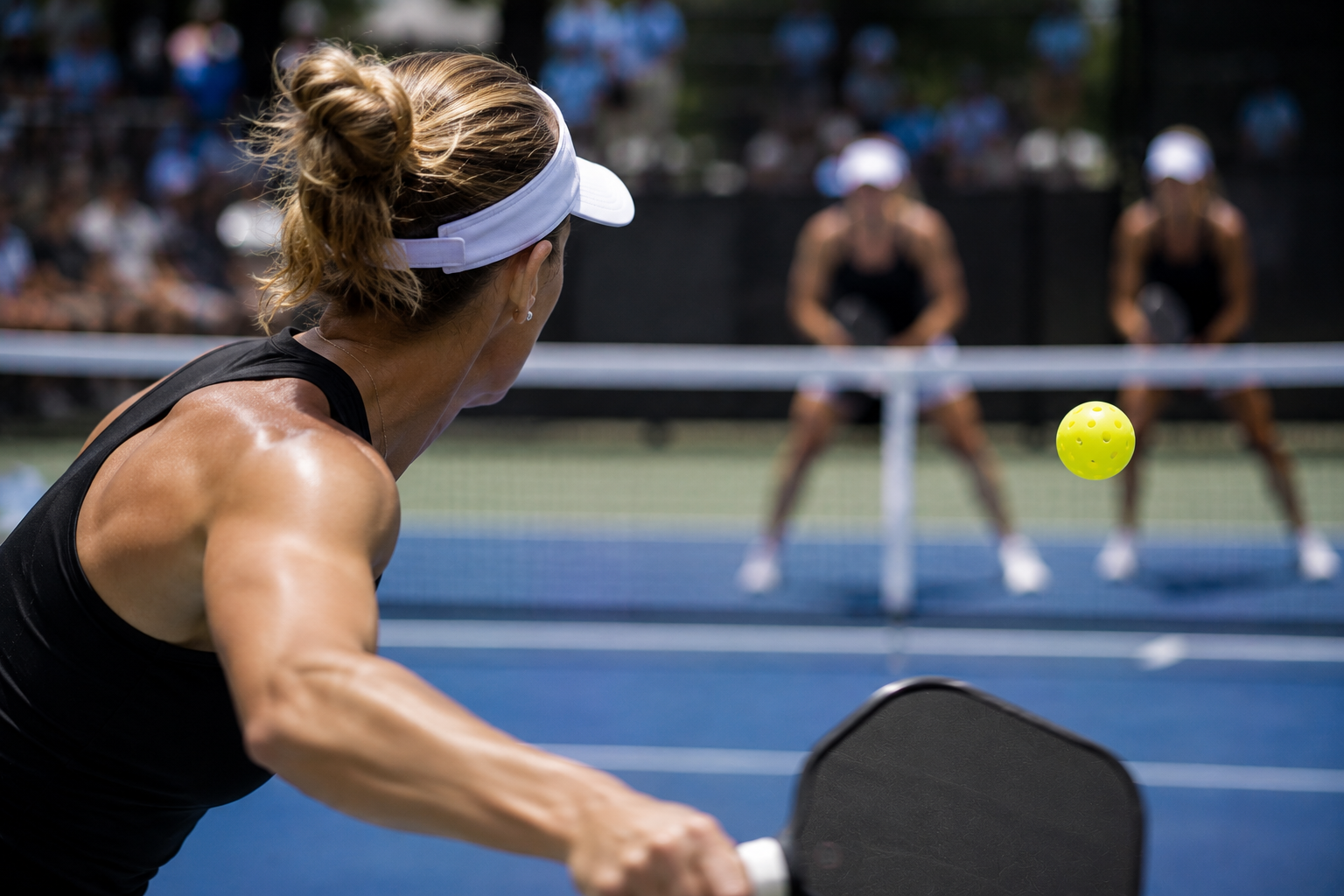
Read Sequence · Read height first. Read backswing second. React after contact.
Read height first. Any time the ball reaches waist height or higher, a hard attack is available. The neutralizer must recognize that possibility — even if the opponent doesn't attack. Read backswing second. Ball height tells you whether the opponent can attack. Backswing length tells you whether they probably will. Larger backswing, weight loading forward, shoulders turning, paddle accelerating — attack is coming. React after contact. Prepare before contact. React after contact. Those two things are not the same.
The 11 Principles
P1
Pickleball Was Built to Throttle Pace
The equipment limits how much pace can be generated and sustained. Every banger is fighting the design of the game. The neutralizer works with it. A perforated ball slows down faster than a tennis ball. A solid paddle absorbs energy rather than amplifying it. The court is short. The system is built for you — not for them.
Coach's Cue: The game is on your side. Trust the design.
P2
The Libero Mindset
Your job is not to win the ball. Your job is to make the next ball happen. Do not try to overpower the attacker. Read the danger, organize the body, keep the paddle forward, and make the ball playable again. One more ball. Then one more after that.
Coach's Cue: Make the attacker hit one more ball.
P3
Defend the Donut
You do not need to cover the whole court. You need to cover your Donut — the circle of space roughly one step in any direction from your position. When you defend your Donut completely, you and your partner create a compressed defensive front that denies the most common attack lanes. Over-moving is the neutralizer's biggest enemy. Compact. Ready. Return to center.
Coach's Cue: Own your circle. Return to center.
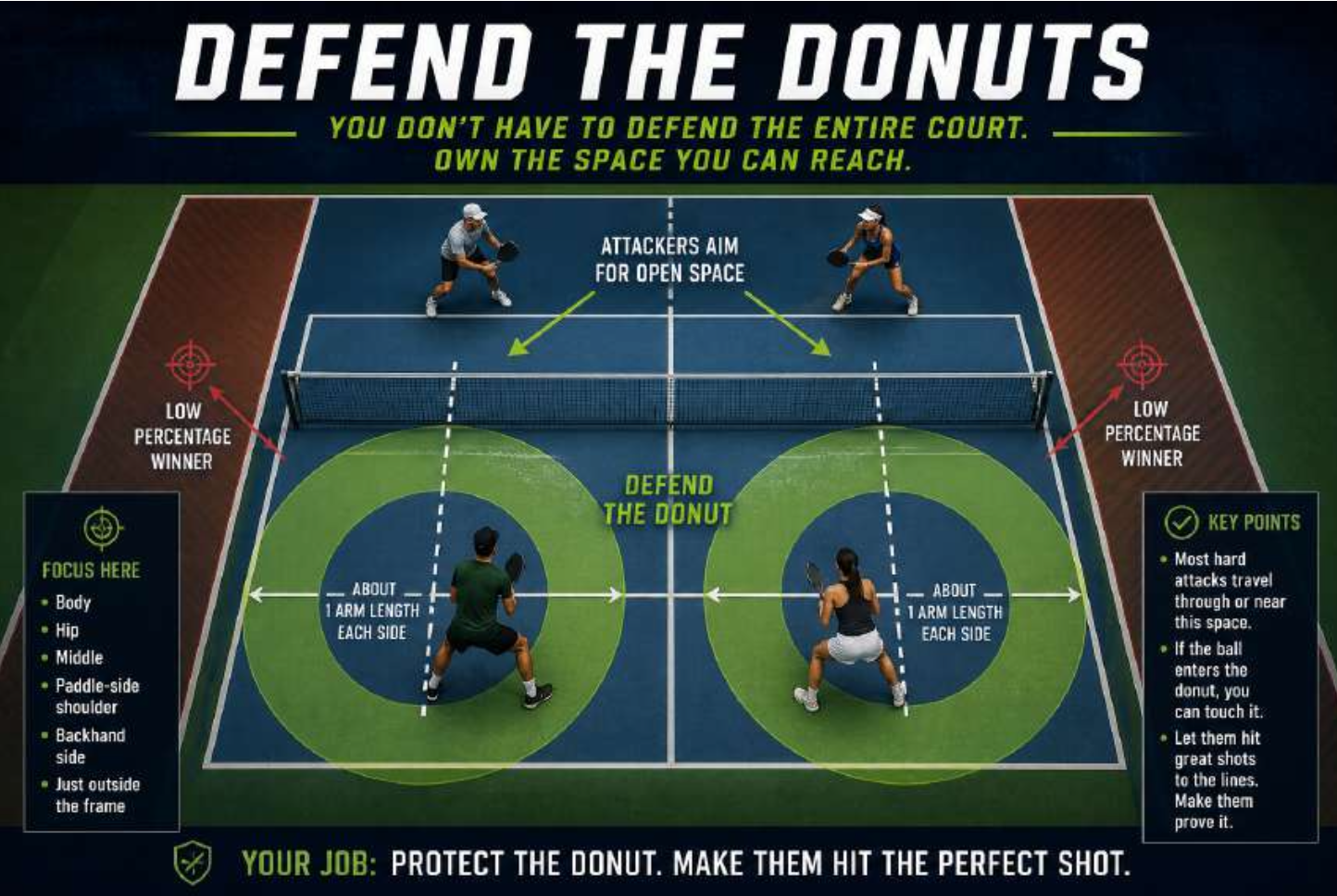
P3 · Defend the Donut · You don't have to defend the entire court. Own the space you can reach.
P4
Do Not Allow Yourself to Guess
Guessing — leaning one way before the attacker contacts the ball — is the neutralizer's most costly mistake. A guess that is wrong leaves half the court wide open. Read height. Read backswing. React after contact. Stay centered, stay balanced, stay out of the guess. The player who guesses is always one step behind. The player who reads is always one step ahead.
Coach's Cue: Observe. Prepare. React. In that order.
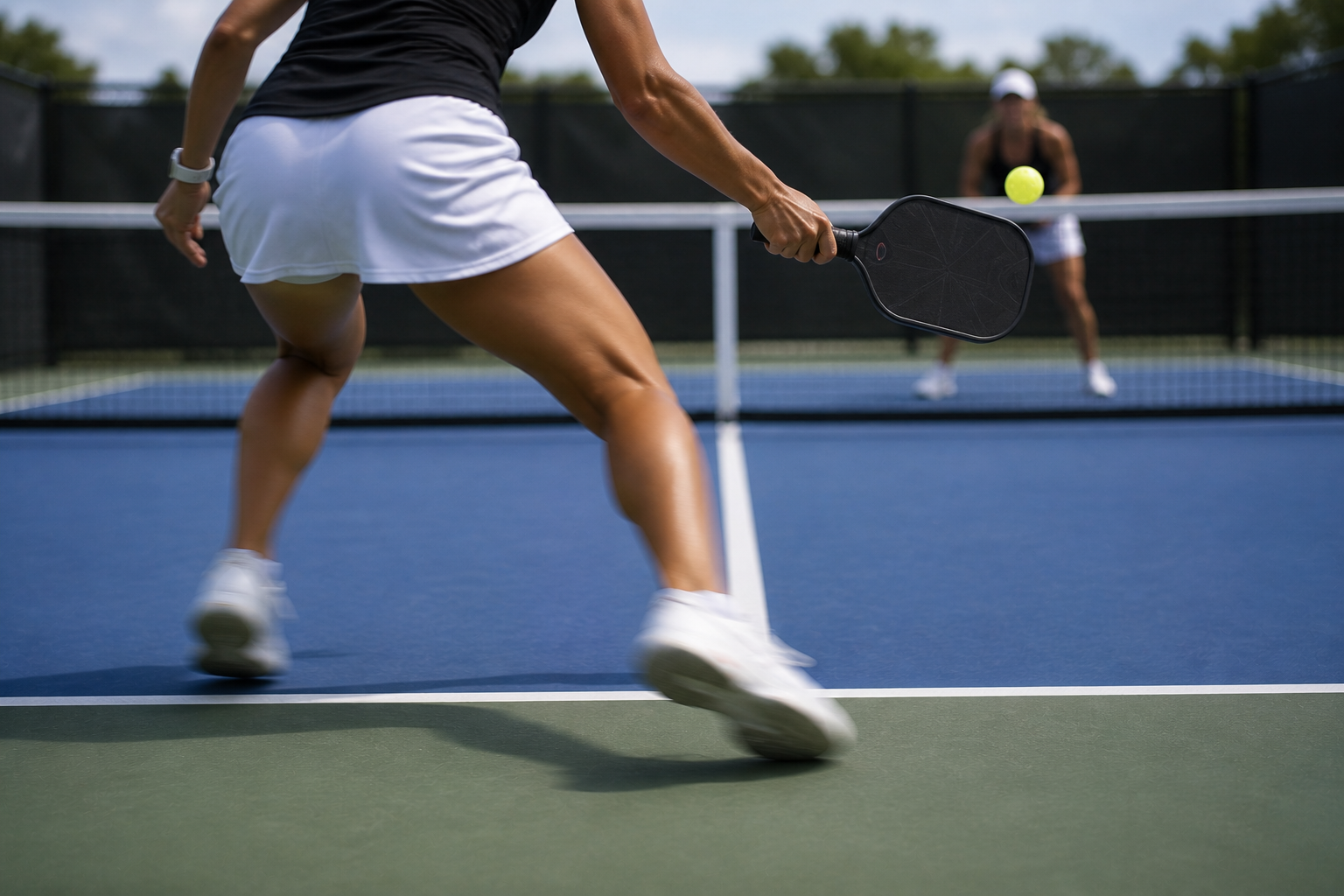
P4 · Do Not Allow Yourself to Guess · Prepare, hold, then react. In that order.
P5
The Neutralizer Read Sequence
Read ball height first — it tells you if an attack is available. Read backswing length second — it tells you if the attack is coming. Body cues reinforce the read: weight loading forward, shoulders turning, paddle accelerating. The final read is contact — when you learn where the ball is actually going. Prepare before contact. React after contact. Those two things are not the same.
Coach's Cue: Read height first. Read backswing second. React after contact.
P6
Drop Step to Go Forward
When a hard attack is coming, the instinct is to step back. The correct response is a drop step — a small step back with one foot that loads the body to move forward. The drop step creates the space needed to absorb the pace without being jammed, while keeping the neutralizer ready to advance rather than retreat. Defense that moves forward is always stronger than defense that moves back.
Coach's Cue: Step back to go forward.
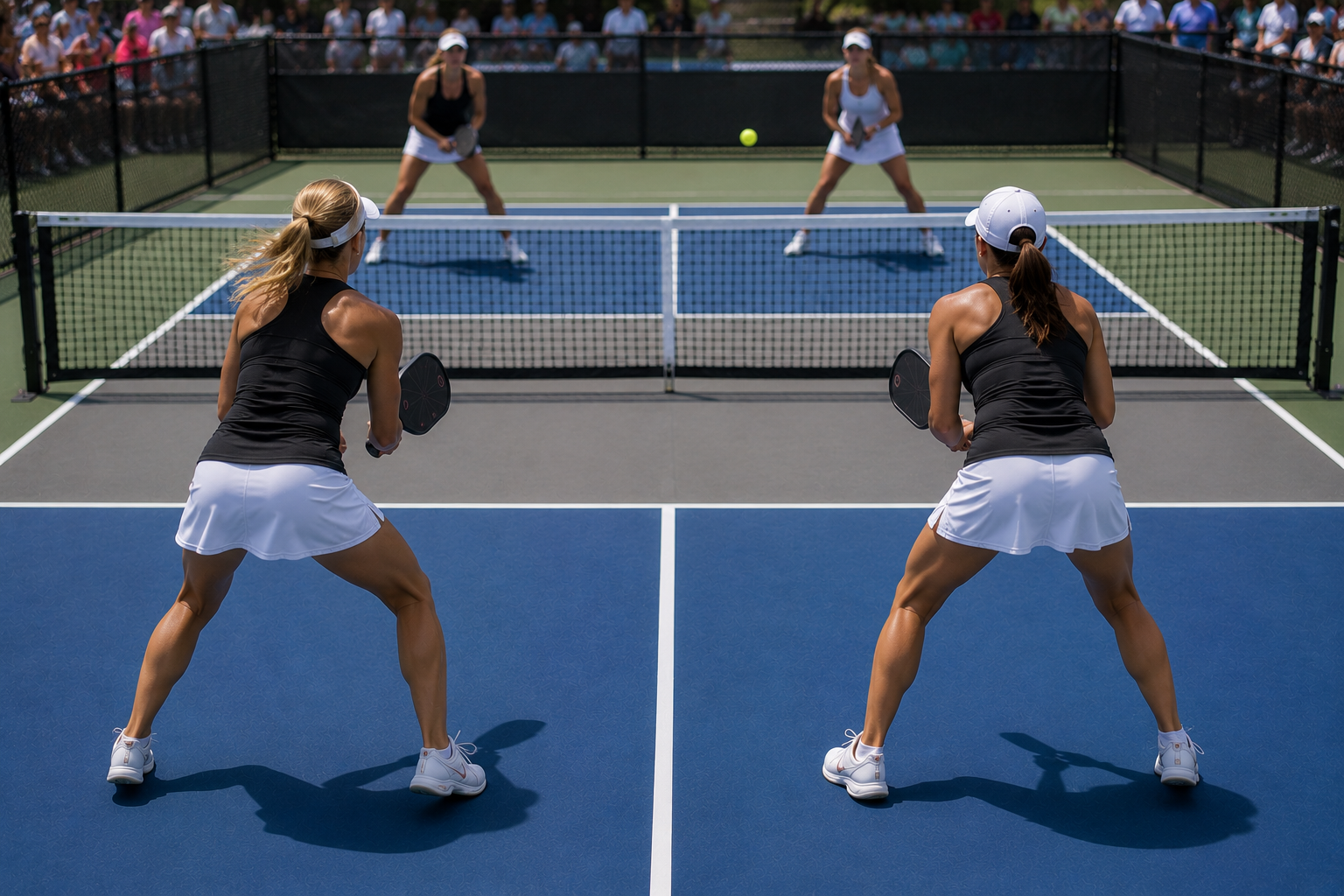
P6 · Drop Step to Go Forward · Create space, then move forward into the ball.
P7
Prepare Early. React Just After.
Preparation and reaction are two separate events. Preparation happens before contact — getting the paddle up, reading the attacker, loading the body. Reaction happens after contact — the split-second adjustment to where the ball actually goes. Players who try to do both at once do neither well. Get ready early. Then wait for what the attacker tells you.
Coach's Cue: Be early. Then be patient.
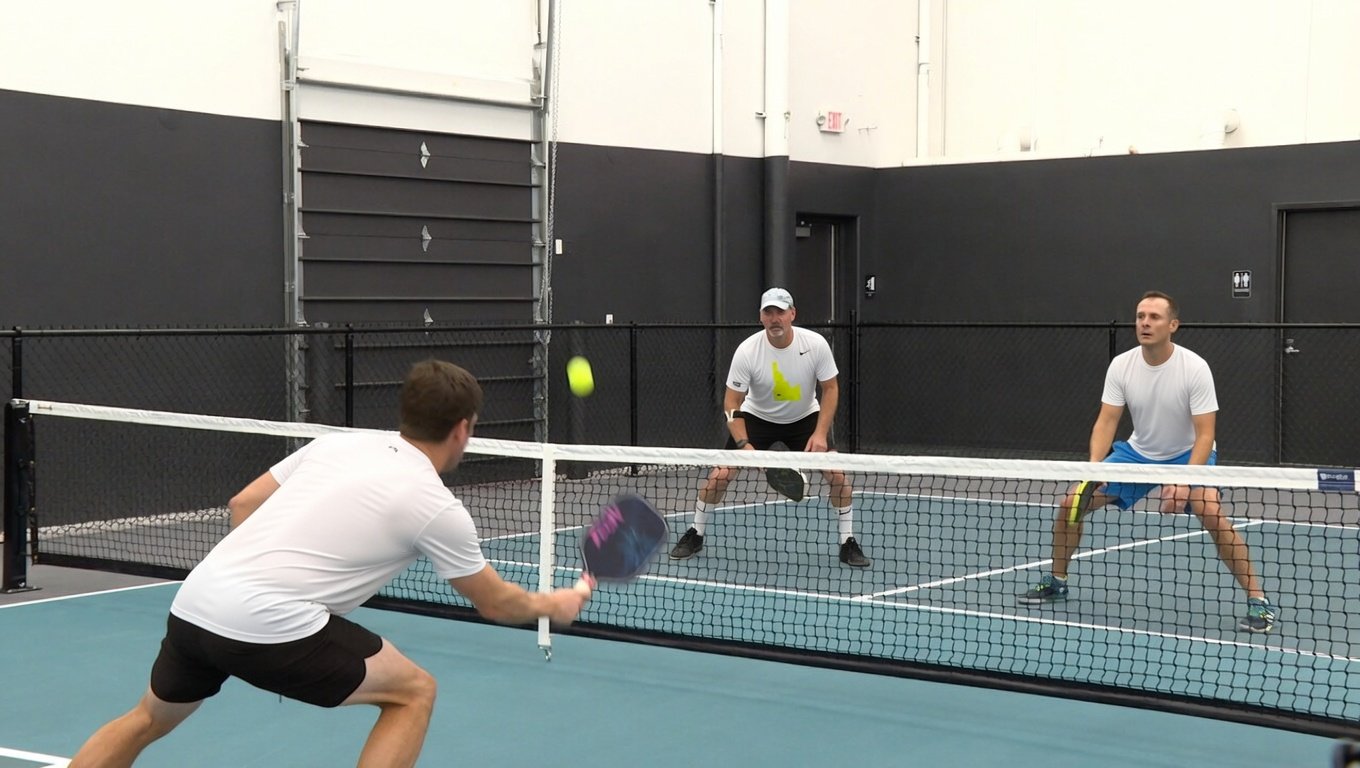
P7 · Prepare Early. React Just After. · Hold does not mean freeze. It means stay ready without flinching.
P8
Paddle Forward, Not Back
The most common neutralizer error: pulling the paddle back to "get ready." A paddle pulled back takes longer to get to the ball, creates a longer swing that generates uncontrolled pace, and telegraphs panic to the opponent. Keep the paddle forward — out in front of the body, between you and the attacker. A compact forward paddle absorbs pace, redirects it softly, and gives you significantly more time to react.
Coach's Cue: Paddle out. Never back.

P8 · Paddle Forward, Not Back · The attacker supplies the pace. You supply the control.
P9
The Highest Percentage Target
When resetting under pressure, most players aim for the nearest open space. The correct target is the middle of the kitchen, near the NVZ line. Middle reduces the risk of going wide. NVZ line forces the opponent to let the ball bounce or reach down, preventing a high-contact attack. This is not the prettiest target. It is the most reliable one under pressure.
Coach's Cue: Middle kitchen. Every time.

P9 · The Highest Percentage Target · Under pressure, middle near the NVZ line. Every time.
P10
If I Can Touch It, I Can Get It Back
A great neutralizer believes that if the paddle can touch the ball, the ball can get back in play. This belief keeps the player from panicking. The goal is not a perfect shot. The goal is to touch the ball and put it back in the kitchen. Players who believe the ball is too fast tighten up. Players who believe they only need a touch stay calmer and quicker. Calm readiness creates better reactions than panic.
Coach's Cue: Touch it. Put it back in play.

P10 · If I Can Touch It, I Can Get It Back · Touch it. Put it back in play.
P11
The Psychological Win
Every reset that survives a banger's best attack is a psychological win — for you and against them. Bangers expect panic. They expect errors. When you absorb pace calmly and put the ball back in the kitchen, you send a message: this isn't working. Over time, sustained neutralization creates doubt. Doubt changes shot selection. Changed shot selection creates errors. The neutralizer's patience becomes pressure.
Coach's Cue: Every reset is a statement. Make it calmly.
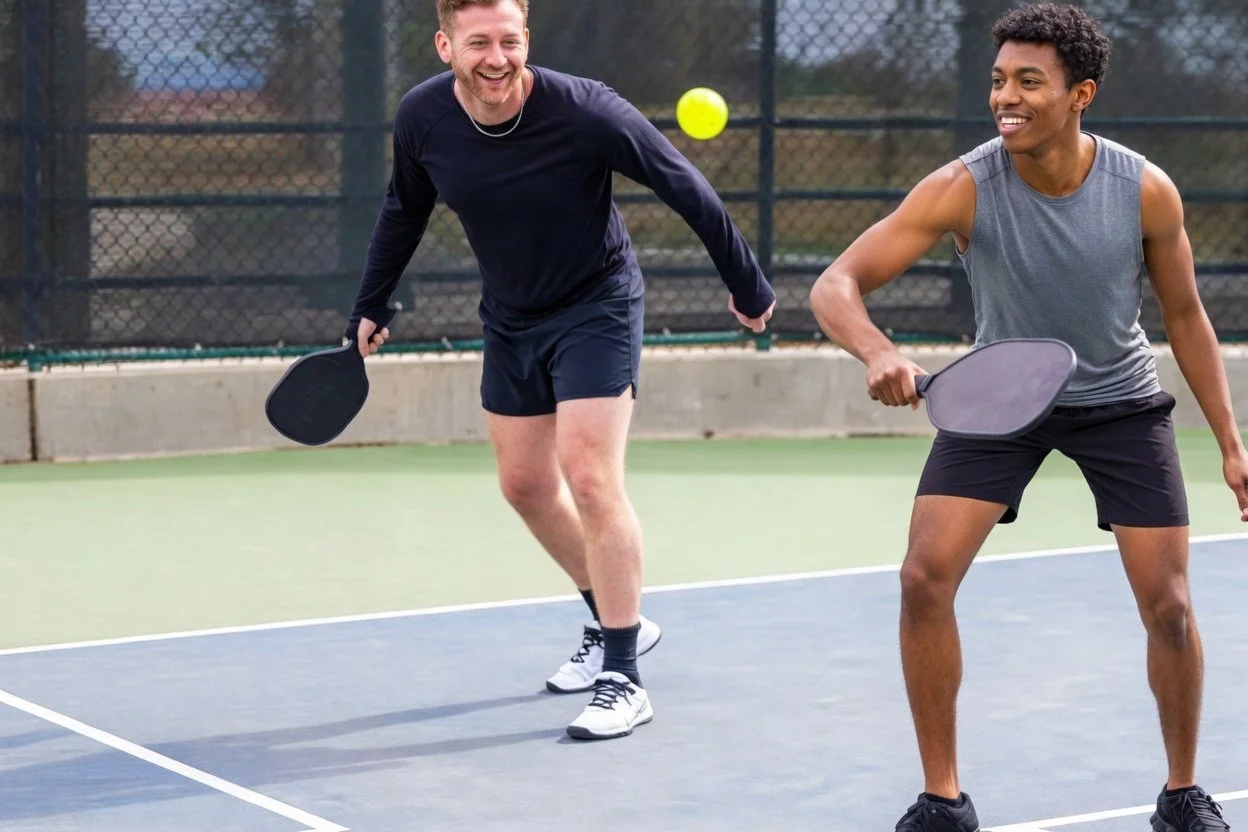
P11 · The Psychological Win · The steadiness itself is the response. Make them prove it again.
The Neutralizer's Edge — Eleven Principles, One Discipline
The Complete System at a Glance
- Read early. Prepare without guessing.
- Move the paddle forward — not back.
- Defend the Donut. Return to center after every shot.
- Target the middle kitchen on every reset.
- Trust that a touch is enough.
- Make the attacker hit one more ball. Then one more after that.
The neutralizer does not need to win the ball. The neutralizer needs to make the next ball happen. Over time, that patience becomes pressure — and that pressure becomes points. The attacker supplies the pace. The neutralizer decides what happens to it.