The Kitchen Line Is the High Ground
Every strategically important position in every court sport has one thing in common: it gives the player who holds it more options than the player who doesn't. In pickleball doubles, that position is the kitchen line — the non-volley zone line.
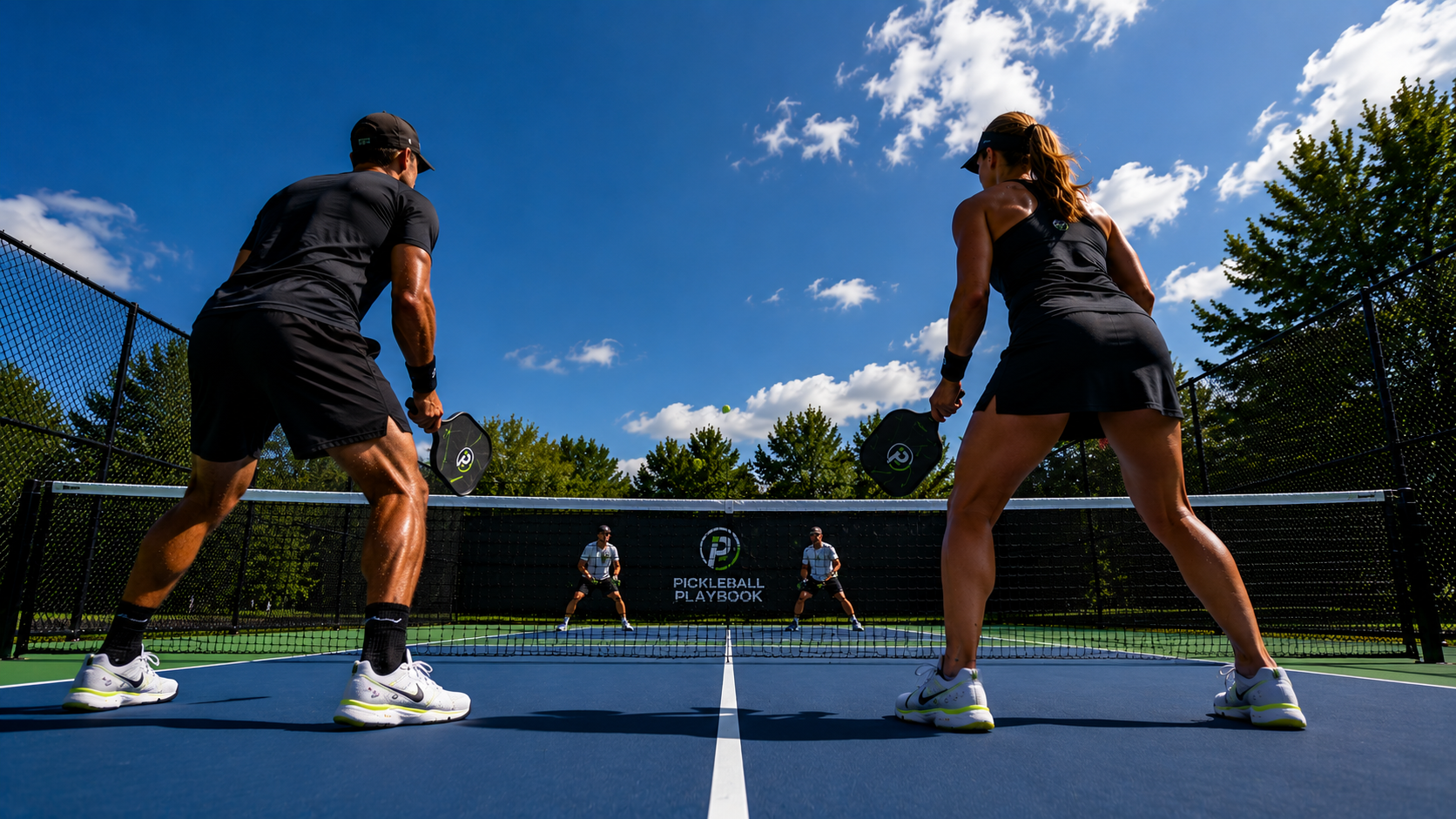
A team at the NVZ line controls the point. They can angle the ball to more of the court. They contact the ball at a higher point, hitting down into the kitchen rather than up over the net. The ball reaches them sooner, giving opponents less time to recover. Every exchange, they hold the structural high ground.
A team in the transition zone — caught between the baseline and the kitchen — has none of these advantages. They hit up. They have fewer angle options. The ball arrives quickly and they are often off-balance. They are playing from a position of disadvantage on every single shot.
Three Advantages of the Kitchen Line
How to Get to the Kitchen Line
The serving team faces the biggest kitchen-line challenge — they must advance from the baseline to the NVZ on every point. The returning team has it easier: they can advance immediately after the return. But both teams need a clear system for getting there safely.
What to Do Once You're at the Kitchen Line
Arriving at the kitchen line is not the end of the strategy — it is the beginning of a different one. Most players arrive at the NVZ and immediately look to attack. The better question is: what does the ball I just received allow me to do?
Use the Traffic Light. Green-light balls — arriving above the waist from balance — get attacked. Yellow-light balls — arriving at mid-thigh — get pressured with a controlled drive or sharp dink. Red-light balls — arriving below the knee — get reset into the kitchen with soft hands. Attacking red-light balls from the kitchen line is the most common error at 3.5 — it gives opponents easy opportunities and surrenders the point from a position of advantage.
Hold your position. Move with your partner. Defend your donut. Dink with patience until a green-light ball arrives. Then attack it.
The Biggest Kitchen Line Mistakes
Arriving alone. One player at the NVZ, one still in transition, is the most common mistake in recreational doubles. The player at the kitchen is exposed because their partner cannot cover the middle. The player still transitioning is in the most vulnerable position on the court.
Attacking red-light balls. Being at the kitchen line does not mean every ball should be attacked. A ball arriving below the knee has no attack angle — hitting it hard sends it into the net or pops it up as an easy counter. Red-light balls get reset, not attacked.
Moving independently. When one player moves wide to cover a dink, they must take their partner with them. Leaving the middle open is the most expensive mistake at the kitchen line. The middle seam between the two players is the highest-percentage target in doubles — whenever it opens, experienced opponents will find it.
Giving up the line. Players who get pushed back from the kitchen line by a hard ball often fail to re-advance. Every time you step back, re-establish your kitchen-line position as quickly as possible. The high ground is worth fighting to hold.
The complete kitchen line system — all 13 Foundation sessions including the Donut, the Rope, the Traffic Light, and kitchen-line communication — is in the free playbook.